Modern SE Asia
Southeast Asian Humidity-Resistant Materials
6 min read|2026-06-10
NhàXinh Editorial
NhàXinh Editorial
Choosing materials suitable for tropical humid climates, from natural wood to artificial stone.
1 / 4
Vietnam's tropical humid climate, with average humidity of 70-80% and long rainy seasons, poses significant challenges for choosing interior materials. Here are the optimal choices proven over time.
## Natural Wood: Teak and Cam Xe
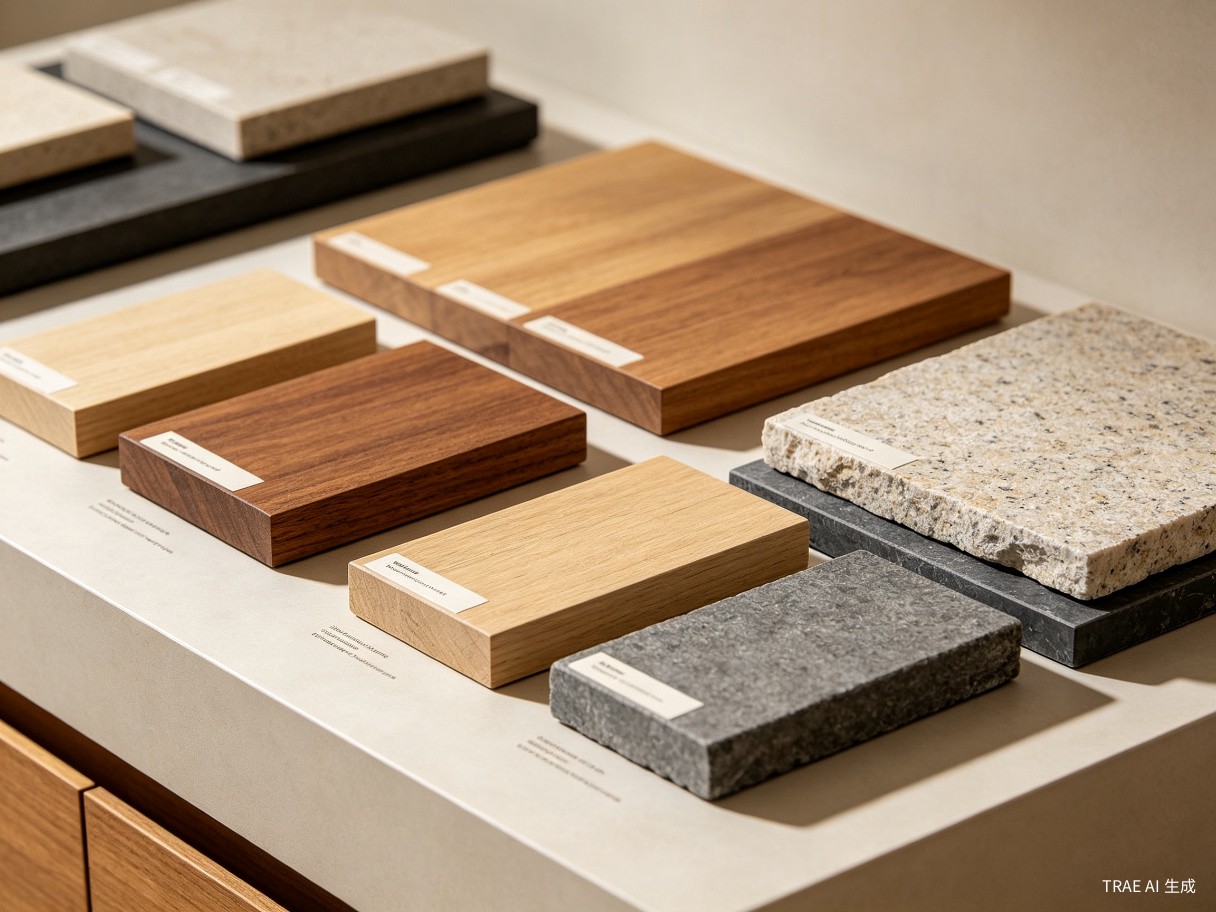
Teak wood is highly regarded for its natural moisture resistance and termite resistance. The natural oils in teak create a protective layer that makes water difficult to penetrate. Cam xe wood is a more economical choice, equally sturdy and durable.
## Artificial Stone (Quartz)
Instead of natural stone that easily absorbs water and stains, artificial quartz is an ideal solution for kitchen countertops and dining tables. Non-porous, easy to clean, and highly durable.
## Anti-Humidity Interior Paint
Use paint with anti-humidity components, especially for north-facing walls and low-lying areas. Dulux Weathershield and Jotun Majestic are two paint lines trusted by many Vietnamese families.
## Fabrics and Leather
Linen and cotton fabrics are the best choices for sofas and curtains because they are breathable and quick-drying. Stay away from synthetic leather (PU) because it easily peels in humid environments. Genuine leather or microfiber fabric are better alternatives.
## Ventilation Blocks
As a characteristic of Vietnamese architecture, ventilation blocks are not only decorative elements but also help air circulation, naturally reducing indoor humidity.
#se-asia#noi-that
Comments (0)
Please log in to comment
No comments yet. Be the first!